Why Comics and Graphic Novels Belong in Every Classroom
Sep 15, 2026
Unlocking the Power of Visual Texts
In today's fast-paced, screen-saturated world, students are constantly bombarded with visual media. Yet, many students struggle to genuinely read and interpret images with intention. Often, they skim panels for the plot and miss the rich layers of meaning hidden in the artwork, panel layouts, and word-image interactions.
Comics and graphic novels are far more than just a gateway to reading—they are sophisticated literary and visual texts that can transform how students think. When integrated thoughtfully into the curriculum, graphic novels foster deep inquiry, resilience, and critical thinking across all subjects.
Here is how educators can harness the power of comics to elevate teaching and learning:
1. Cultivate Slow Looking with Intention
In an era of instant gratification, teaching students to slow down is a revolutionary act. Graphic novels invite readers to pause, observe, and wonder:
-
Embrace the Gutter: Teach students to linger in the "gutter"—the white space between panels—to infer what happens in the unseen time and space.
-
Unpack Visual Choices: Guide students to examine why an author chose a close-up versus a wide shot, or why a specific color palette dominates a scene.
-
Foster Open-Minded Inquiry: Encourage students to ask questions without rushing to immediate conclusions, building comfort with ambiguity.
2. Develop Independent Learners for Real-World Contexts
Comics demand active participation. Because graphic novels combine text and image, readers must synthesize two sign systems simultaneously to construct meaning.
-
Empower Self-Directed Analysis: Give students the space to notice patterns, track visual motifs, and form their own interpretations before leading a class discussion.
-
Connect to the Real World: Show students how visual storytelling applies beyond the classroom—in data visualization, graphic journalism, science communication, and civic advocacy.
-
Encourage Creative Expression: Allow students to demonstrate knowledge through mini-comics or storyboards, validating diverse ways of knowing.
3. Deepen Thinking on Complex Systems
Complex subjects—from historical ecosystems to abstract philosophies—become tangible through sequential art.
-
Map Complex Systems: Use graphic novels or student-created diagrams to break down intricate processes, such as historical timelines or biological systems.
-
Make Thinking Visible: Comics allow students to externalize internal processing, clarifying their understanding of difficult concepts through drawing.
-
Bridge Literacy Gaps: Graphic novels provide crucial scaffolding for English language learners and struggling readers through contextual visual cues.
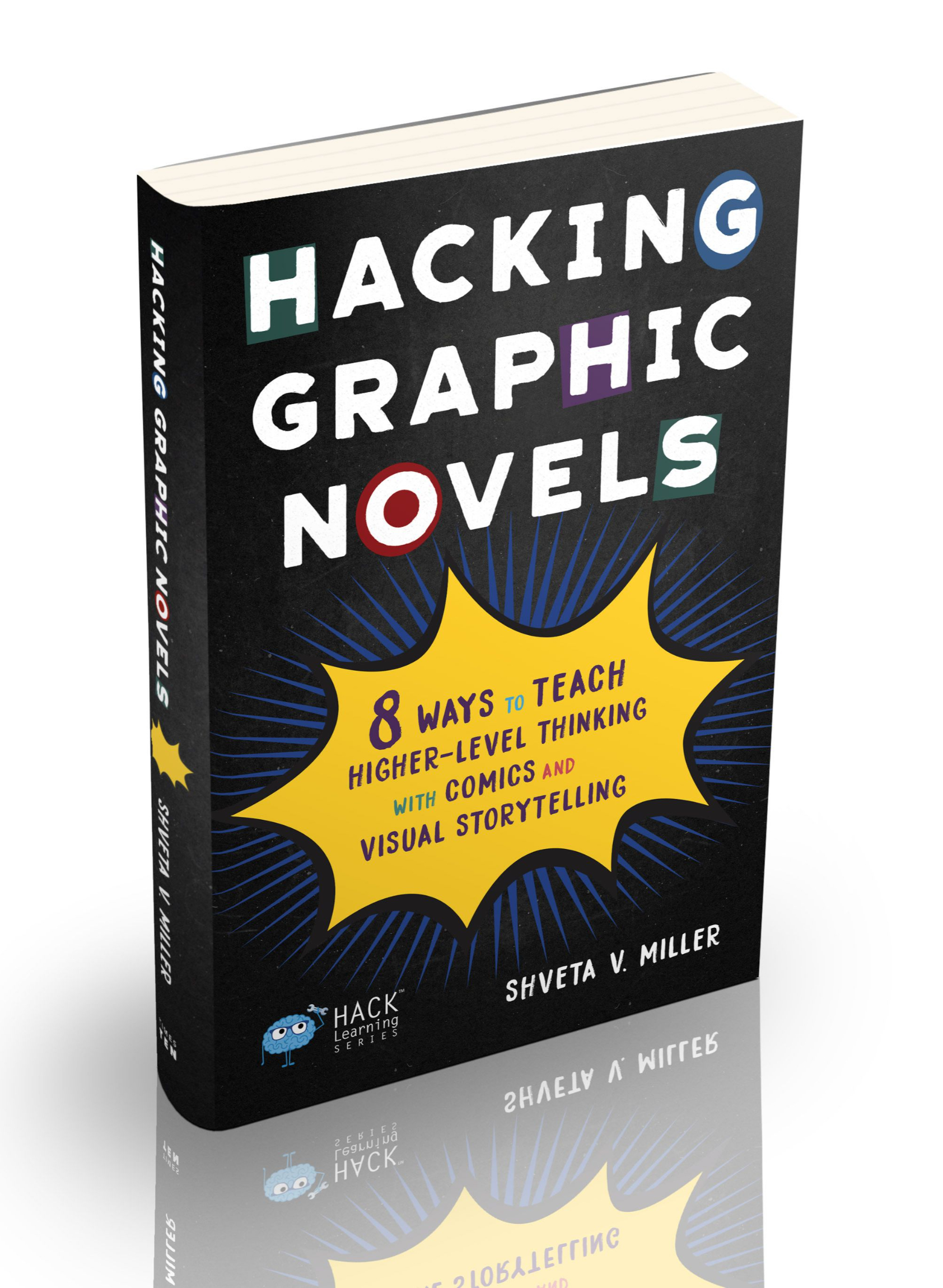
4. Push Past the Comfort Zone into Growth
Many students fear "getting it wrong," especially when facing dense texts. Graphic novels offer a safe yet rigorous entry point into productive struggle.
-
Embrace Complexity: Introduce graphic novels tackling heavy themes (such as civil rights, mental health, or environmental crises) to challenge students intellectually.
-
Reframe Frustration: Teach students that struggling to interpret a subtle visual metaphor or an unconventional layout is a sign of deep learning, not failure.
-
Build Resilience: Decoding challenging visual texts builds the grit needed to tackle rigorous, multifaceted problems across all academic areas.
5. Inspire the Entire School Community
The magic of comics is contagious. When school communities see what students achieve through graphic novels, perceptions shift.
-
Advocate to Stakeholders: Share student comic-based projects with administrators and families to demonstrate that visual literacy is rigorous and standards-aligned.
-
Collaborate Across Disciplines: Partner with history, science, and art teachers to show how visual texts transcend traditional subject boundaries.
-
Ignite Joy: Watch hesitant readers transform into enthusiastic participants when given permission to explore the world through words and pictures.
By bringing comics and graphic novels into the heart of our teaching, we do more than teach a medium—we teach our students how to see the world more clearly, think more deeply, and express themselves more boldly.
How have you integrated visual texts or graphic novels into your own classroom or curriculum?