Behind the Disruption: How Trauma-Responsive Practices Change Student Behavior
Mar 02, 2026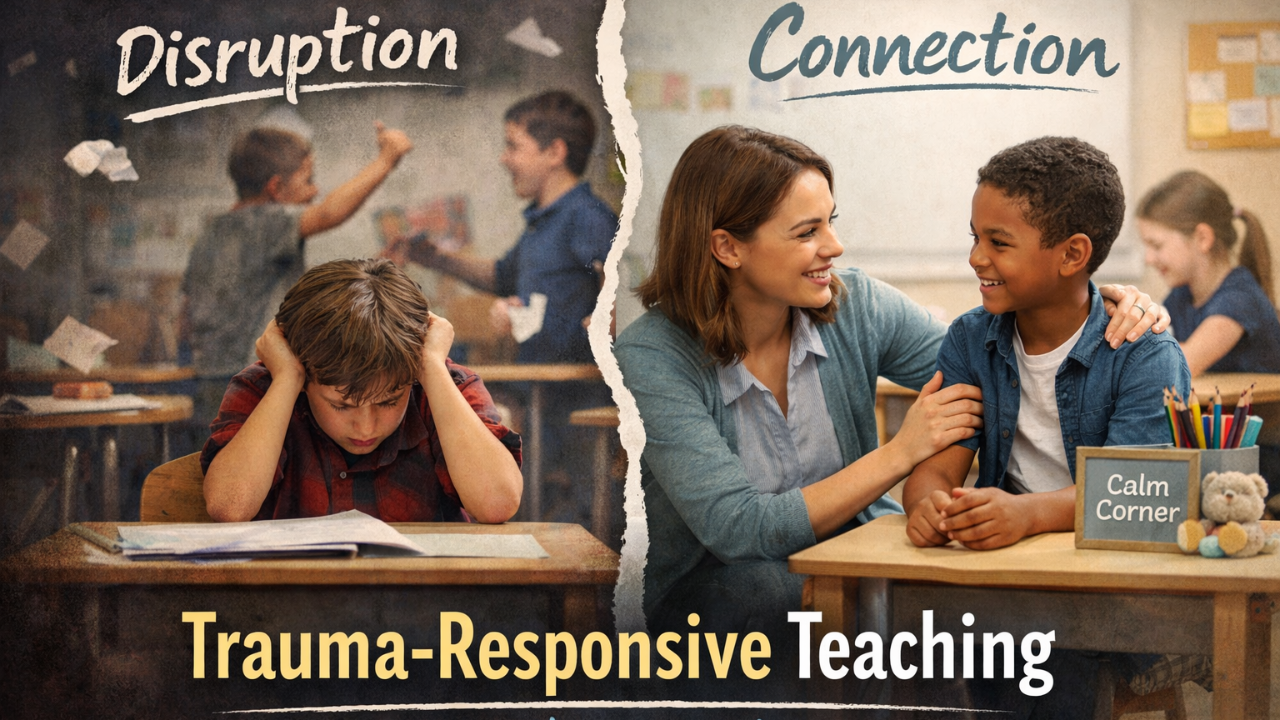
If you’ve taught for more than five minutes, you’ve seen it:
-
The student who explodes over something small
-
The one who shuts down and refuses to work
-
The child who constantly disrupts, wanders, argues, or withdraws
It’s easy to label these as behavior problems.
It’s harder—but far more powerful—to ask:
What might this student be carrying into my classroom?
Trauma-responsive practices don’t excuse behavior.
They help us understand it.
And when we understand behavior, we can reduce disruptions—without escalating conflict.
First: What Do We Mean by “Trauma-Responsive”?
Trauma-responsive teaching recognizes that many students have experienced:
-
Family instability
-
Abuse or neglect
-
Community violence
-
Chronic stress
-
Poverty-related insecurity
-
Loss, illness, or addiction in the family
Trauma impacts the brain—especially areas responsible for:
-
Emotional regulation
-
Impulse control
-
Attention
-
Trust
-
Problem-solving
What looks like defiance may actually be dysregulation.
What looks like laziness may be exhaustion.
What looks like disrespect may be survival mode.
When we shift from “What’s wrong with this student?” to “What is this student responding to?”, everything changes.
5 Trauma-Responsive Practices That Reduce Classroom Disruptions
These aren’t complicated systems.
They’re practical shifts teachers can implement immediately.
1. Create Predictable Routines
Students who live in chaos crave predictability.
Clear daily structures reduce anxiety:
-
Post the agenda
-
Start class the same way every day
-
Preview transitions
-
Avoid surprise changes when possible
Predictability lowers stress.
Lower stress reduces reactive behavior.
What you can do tomorrow:
Begin class with the same 3–5 minute routine every day this week.
2. Regulate Yourself First
Dysregulated adults cannot regulate dysregulated children.
When a student escalates:
-
Lower your voice
-
Slow your speech
-
Avoid public confrontations
-
Step beside, not in front
Your calm becomes their ceiling.
Students borrow our nervous systems.
If we escalate, they escalate.
What you can do tomorrow:
Before responding to a disruptive student, pause for three seconds. Breathe. Then speak.
3. Replace Public Correction with Private Redirection
Public correction often triggers shame—and shame fuels defiance.
Instead:
-
Use proximity
-
Leave a quiet sticky note
-
Whisper directions
-
Ask a private question: “What’s going on right now?”
You’re not ignoring behavior.
You’re protecting dignity.
Dignity-preserving responses dramatically reduce power struggles.
What you can do tomorrow:
Redirect at least one student privately instead of publicly.
4. Teach Regulation Skills Explicitly
Many students were never taught how to regulate emotions.
Trauma-responsive classrooms intentionally teach these skills through:
-
Brief breathing routines
-
Movement breaks
-
Calm-down spaces
-
Visual self-regulation scales
-
Reflection sheets after incidents
These are not “rewards.”
They are skill-building tools.
We teach reading.
We teach math.
We must also teach emotional regulation.
What you can do tomorrow:
Introduce a simple 60-second breathing reset before independent work.
5. Build Connection Before Correction
Students comply more readily with adults they trust.
Small connection moves matter:
-
Greet students at the door
-
Notice effort, not just achievement
-
Ask about interests
-
Follow up on yesterday’s conversation
Connection reduces disruption more effectively than consequence charts ever will.
When students feel safe, behavior improves.
What you can do tomorrow:
Choose one challenging student and intentionally connect with them for two minutes—no correction, no lecture.
Why Trauma-Responsive Practices Work
Trauma-responsive practices work because they:
-
Lower student stress
-
Increase feelings of safety
-
Preserve dignity
-
Strengthen relationships
-
Teach missing skills
-
Reduce power struggles
And here’s the key:
Trauma-responsive does not mean permissive.
It means intentional.
You can hold high expectations and respond with empathy.
In fact, empathy strengthens accountability.
A Final Word
Disruptions are often signals.
They signal:
-
Stress
-
Fear
-
Skill deficits
-
Unmet needs
-
Emotional overload
When we respond with control, we escalate.
When we respond with curiosity and structure, we de-escalate.
You don’t need a full-school overhaul to become trauma-responsive.
Start small.
Be consistent.
Protect dignity.
Lead with calm.
Behind every disruption is a student trying—sometimes imperfectly—to cope.
When we respond intentionally, we don’t just reduce behavior problems.
We create classrooms where students feel safe enough to learn—and teachers feel empowered to teach.