Clearing Paths to Change in the Post-Pandemic World
Sep 03, 2026
Commentary
By Mark Barnes
Teachers and school leaders sacrificed so much during a global pandemic. A tsunami of issues came hurtling their way, but they stood on the shore, dug in their heels, and would not be moved.
They embraced the Zoom age, hybrid teaching, and remote learning, while constantly dodging complaints from parents, students, and politicians. Some didn't make it, but most persevered.
A global pandemic, as I see it, could not defeat educators.
The battle with the education system, though, continues, and the pandemic that landed many devastating punches, exposed education's worst flaws.
Education may be down, but it's not out yet. While exposing the flaws, the pandemic has also cleared the path to change. Let's look at the flaws and the paths to improving the system, years after the pandemic first hit.
Flaw: testing and grades
The idea of sorting and labeling students has been around since the days of the one-room schoolhouse. These outdated methods have never done anything but misrepresent learners and discourage independent learning.
While the pandemic ended some standardized testing (one positive result), most schools forged ahead with unit tests and semester exams, even as students battled their own pandemic-related demons.
School leaders demanded grades, and teachers, many acting on the premise that they needed to maintain the status quo, delivered one assignment after another, handing out late penalties and zeroes, as if life were no different from 2019 and before.
Students failed and talk of lost learning, summer school, retention, and other outdated interventions ensued.
Sure, people have discussed this flaw before the pandemic; many teachers have penned books on the subject. Now, though, when stress, anxiety, and depression are still at all-time highs post-pandemic, more people are lamenting the deleterious effects of testing and grades on students.
Path to change: abolish tests and grades
While many schools stood by their traditional systems, some saw the pandemic as an opportunity to change their practice. They chose projects and other unique assignments over exams, and they created progressive alternatives to grades. (Granted, some of those were workarounds, but they are a step in the right direction, nonetheless.)
With this door cracked, there's never been a better time to kick it wide open.
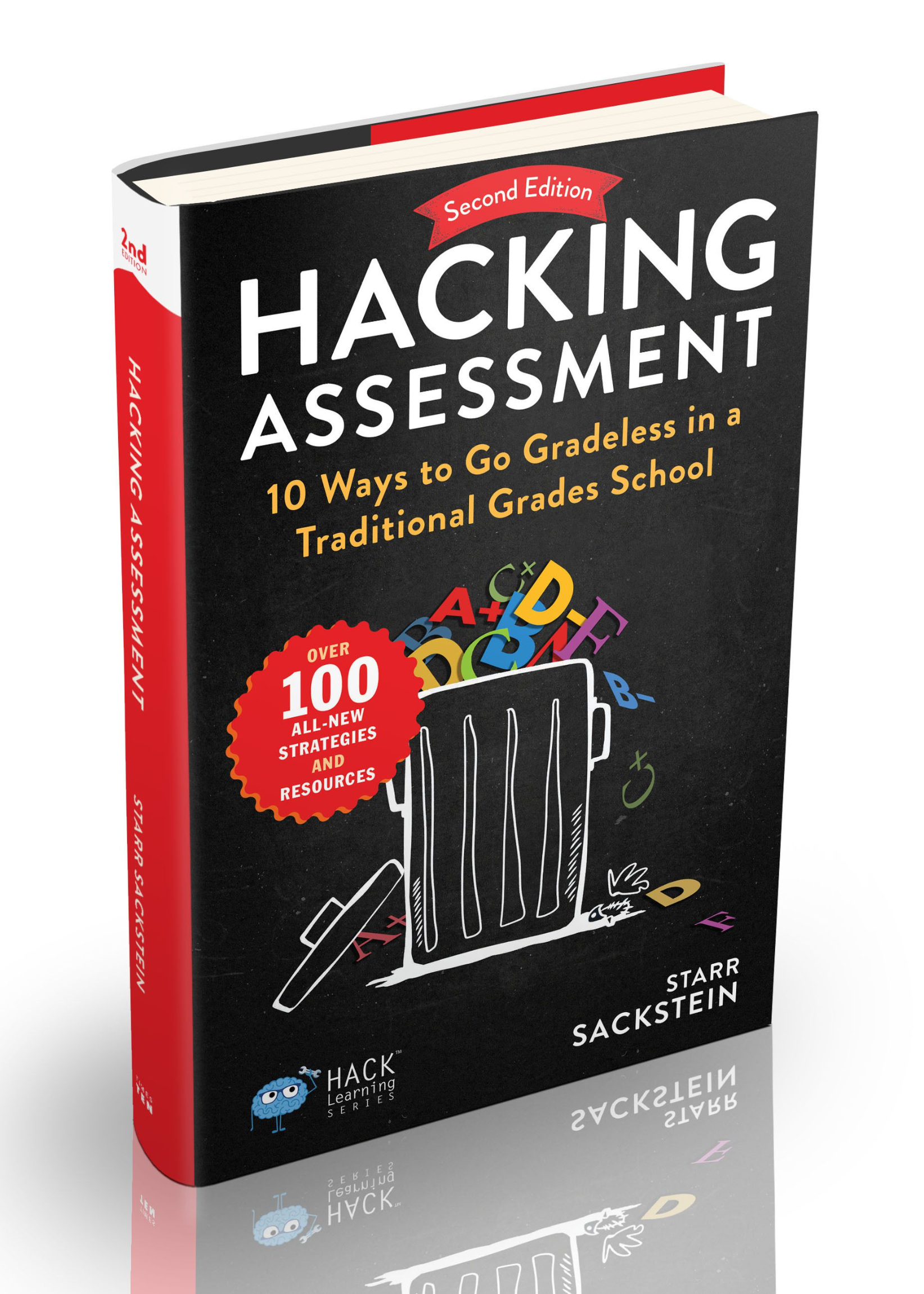
Check out Hacking Assessment (2nd Edition)
For years, powerful companies--Google is one--have underscored their preference for employees who exhibit creativity, innovation, and cooperation, rather than high GPAs and SAT scores. Some private and public schools have elected to assess learning with portfolios, badges, and mastery transcripts.
Numerous colleges and universities have eliminated the GPA as part of their application process, electing to use portfolios and other assets that better represent a student's achievement. "Digital portfolios create a virtual time capsule for high school students, illustrating growth over many school years," writes Starr Sackstein in Hacking Assessment. "When entering college, students can show admissions officers real work—examples of performance and progress that say much more about learning than a GPA ever could."
Modern technologies are also making feedback for learning easy and impactful. Some companies are teaching feedback literacy to students and parents, helping them learn to assess themselves and their peers--a quality that business owners are requesting more often.
Throwing out tests and grades is, of course, a systemic change that requires more than simply tossing out points, letters, and report cards. If anything, the pandemic taught us that we are resourceful people, who will do whatever it takes to improve.
The path to reimagining how learning is assessed is getting wider, and now is the time to move forward.
Flaw: outdated teaching models
Teachers and leaders faced new challenges daily when the pandemic struck. They were forced to adapt to distance learning, which many had never even attempted. They had to communicate in new ways with parents and students. They were forced to battle an invisible foe, while facing students in school and on computer screens. Years after that tumultuous time, it's difficult to remember how they did it.
While many teachers embraced new styles and strategies, others clung to traditional methods, assuming they would still work--even though most of those methods had been failing for decades. This was especially hard on remote learners, who were forced to muddle through difficult assignments, tests, and homework, without the in-person support of teachers and specialists.
While virtual learning provided opportunities for teachers to get creative, many either chose to ignore the opportunity or simply didn't have enough training and support to effectively teach online. Again, students suffered, as the old-school sit-and-get instruction continued online.
The solution, in most cases, was to race back to school--a frighteningly flawed and shortsighted decision.
Path to change: develop impactful virtual learning programs
While in-school teaching may be back, some asynchronous learning is here to stay. We learned so much during the pandemic about teaching stay-at-home, or remote, learners. As the 2020-2021 school year progressed, educators improved their practice daily, learning innovative strategies and embracing new technologies.
Even better, many students became competent independent learners, and producing effective independent learners must always be education's top priority. The path is widening. Now, school leaders must continue clearing it by providing ongoing training for teachers, parents, and students.

We can no longer be shackled to in-school, in-person education. We have to expand the meaning of hybrid education, especially in a world overrun by artificial intelligence.
"Student reaction has totally sold me on the engagement potential of flipped lectures," writes James Sturtevant, author of three popular Hacking Engagement books and creator of the Epic Virtual Presentations video training (click image above to access the free video). "One student told me, 'I prefer the flipped lecture because watching videos is what my generation does.' The challenge for teachers then becomes making engaging flipped (asynchronous) lectures."
Imagine the possibilities. Schools can better manage staffing needs and their physical plants by creating more asynchronous course offerings.
Will distance or remote learning work for all? Of course not. Asynchronous learning can work, though. It will take plenty of planning and might look different in schools across the nation. In time, though, education will be better with this model.
Flaw: Ignoring self-care
Anxiety and depression became central topics during the pandemic, even though mental disorders have presented huge issues for teachers and learners for decades. We've always seemed to push this under the rug, though, as few people want to face the sensitive subject.
The pandemic changed this.
Suddenly, parents, teachers, and some school leaders began discussing the need for a more proactive approach to mental illness and self-care.
So, if we're talking about it, why is it a flaw? Because talking isn't the same as doing. The talk has cleared the path, and now we must do much, much more, especially in this toxic, polarizing political world.
Path to change: teach self-care to students and staff
As more teachers and school leaders understand the impact anxiety and depression have on students and educators, we must take a proactive approach to integrating self-care into classrooms.
We need to formalize the conversation and move it into the pedagogy. Not sure how to do it? Ask the Hack Learning Coach.
The pandemic has cleared the path to these and other education flaws. How you approach this path is up to you.
Notice: a prior version of this post appeared on the Times 10 Blog in 2022. This post has been updated and revisied with permission.