The Power of Presence: Why Cultural Integration is the Future of Education
Feb 26, 2026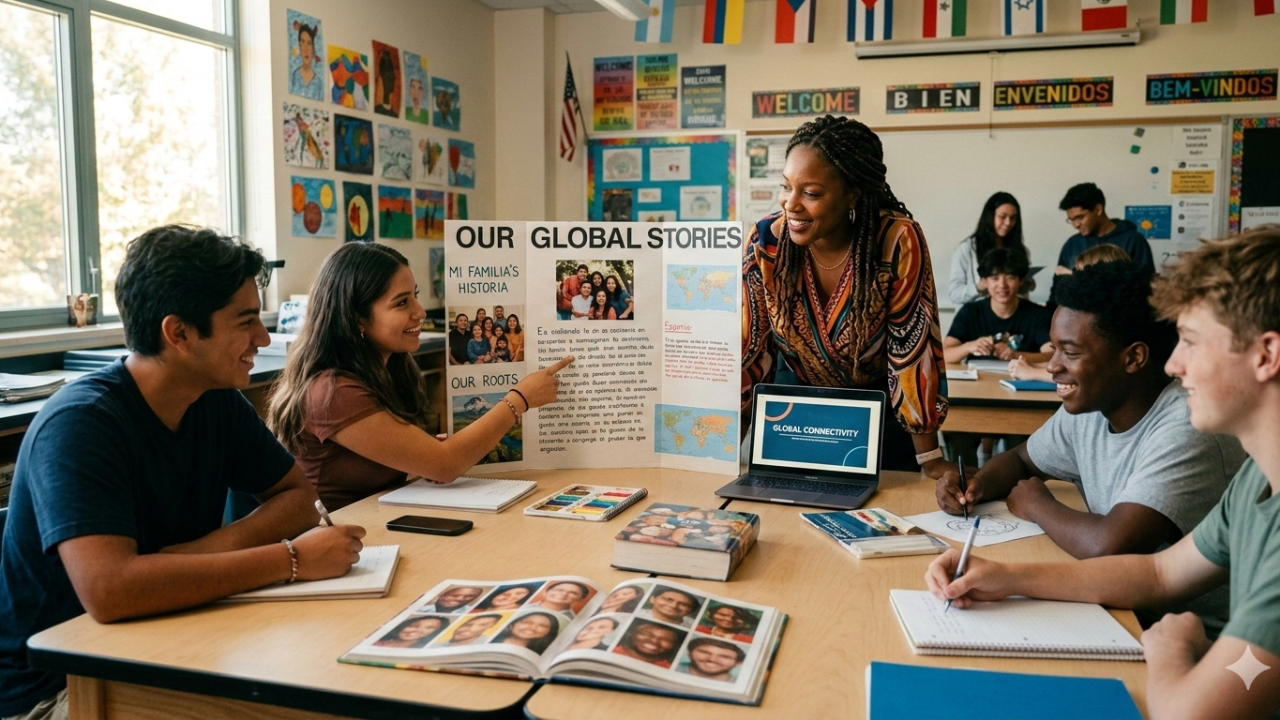
In the modern classroom, the world is quite literally in the room. Our students arrive with a tapestry of backgrounds, carrying languages, traditions, and lived experiences that span the globe. Yet, for too long, many of these students have walked through school doors only to find their identities left at the entrance.
When students don’t see themselves reflected in the curriculum or hear their home languages valued, it creates a subtle but profound barrier to success.
The journey toward a truly inclusive classroom is ongoing, but the steps are clear.
True equity in education isn't about treating everyone exactly the same; it’s about ensuring every student has the tools and the environment they need to flourish. By integrating student culture and language into the fabric of daily learning, we don't just "help" diverse learners—we enrich the educational experience for everyone.
Moving Beyond the "Standard"
For decades, the educational gold standard has leaned heavily on "Standard English" and a Western-centric curriculum. While these have their place in a professional context, using them as the only metric for intelligence or success is a disservice to the modern learner.
When we shift away from rigid, one-size-fits-all assessments, we begin to see students’ native languages and home cultures not as hurdles to overcome, but as learning resources. A student who speaks two languages possesses a cognitive flexibility that should be celebrated and utilized in problem-solving.
A student who understands a different cultural social structure brings a unique perspective to history or literature discussions.
Strategies for a Culturally Sustaining Classroom
Building an inclusive environment doesn't require a complete overhaul of your lesson plans overnight. Often, it is the subtle, sustaining practices that make the most significant impact. Here is how educators can begin to bridge the gap:
-
Integrate Culturally Relevant Materials: Look at your reading lists and case studies. Do they represent a variety of voices? Integrating materials that reflect the actual demographics of your classroom allows students to see themselves as the protagonists of their own education.
-
Connect Learning to Lived Experiences: Abstract concepts become concrete when they are tied to a student’s reality. Whether it’s using local neighborhood examples in a math problem or discussing community issues in social studies, making learning "real" increases engagement and retention.
-
Create an Authentic Learning Environment: Honesty is the foundation of inclusion. Acknowledging the different challenges students face and creating a space where they feel safe to express their authentic selves fosters a sense of belonging that is essential for academic risk-taking.
Why It Matters for All Students
You might wonder: If I focus on specific cultures, am I leaving others out? Quite the opposite. When we "shine a light" on the diverse backgrounds within a classroom, we are teaching all students how to navigate a global community.
In a world that is more connected than ever, the ability to empathize with, understand, and collaborate with people from different backgrounds is a vital 21st-century skill. By creating a culturally inclusive classroom, you are preparing every student—regardless of their own background—to be a thoughtful and effective global citizen.
The Path Toward Equity
Equity in education is an active pursuit. It requires educators to be intentional about the mirrors and windows they provide in their classrooms—mirrors so students can see themselves, and windows so they can see the world.
When we treat a student’s heritage as an asset rather than a deficit, we unlock their full potential. We move from a model of "compliance" to a model of "connection." The result is a vibrant, honest, and high-achieving environment where every learner feels seen, heard, and valued.
"When you embrace the rich languages and cultures of your students, you aren't just teaching a subject—you are affirming a human being."
The journey toward a truly inclusive classroom is ongoing, but the steps are clear. It starts with a shift in perspective: viewing diversity not as a challenge to be managed, but as a superpower to be harnessed.