Beyond the Red Pen: Inspiring Students to Take the Wheel of Their Own Learning
Aug 10, 2026
For generations, the traditional feedback loop in education has looked identical: A student submits an assignment, a teacher covers it in red ink—correcting grammar, circling errors, and slapping a letter grade at the top—and the student glances at the score, shoves the paper into a backpack, and moves on.
That isn't teaching; that's archiving.
If our ultimate goal as educators is to foster lifelong learners, we have to ask ourselves a hard question: Does traditional grading actually motivate students to grow, or does it simply teach them to comply?
When assessment is viewed merely as an audit of what a student got wrong, motivation plummets. But when we transform feedback into a catalyst for dialogue and put students in the driver's seat of their own evaluation, everything changes. Here is how we can move beyond the red pen and inspire true student ownership.
1. Shift from Post-Mortem Grading to In-Process Feedback
Waiting until the end of a project or unit to provide feedback is like giving a driver directions after they’ve already crashed. By the time the grade book is updated, the emotional and cognitive connection to the work has faded.
To keep students engaged, feedback needs to be timely and actionable while the work is still breathing.
-
Halt and pivot: Offer formative checkpoints where students receive constructive critique with enough runway left to actually apply it.
-
Focus on growth over compliance: Frame comments around what’s next rather than what’s wrong. Instead of pointing out every single typo, highlight one major conceptual strength and one clear, high-impact area for revision.
When students realize feedback is a tool to help them level up rather than a final judgment on their intelligence, their willingness to take creative risks increases exponentially.
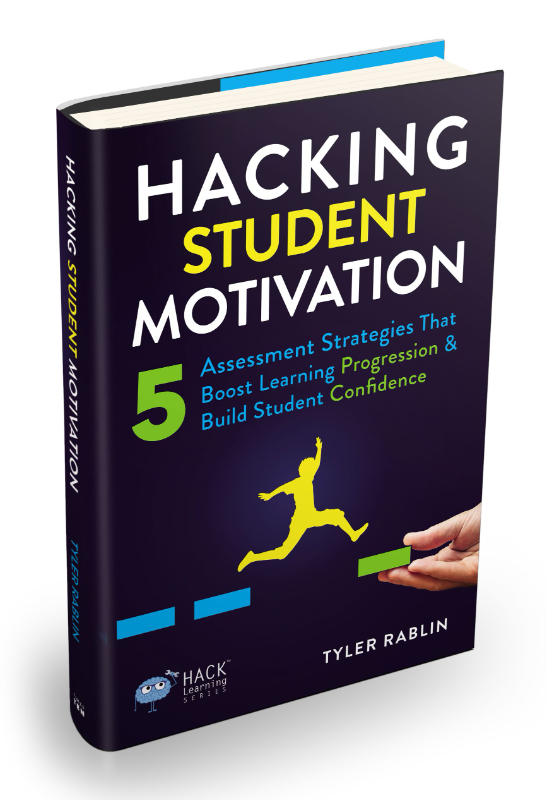
2. Cultivate Self-Assessment and Reflection
True motivation cannot be outsourced. If a student relies entirely on the teacher to tell them whether their work is "good," they will never develop internal standards of excellence.
We have to build regular spaces for metacognition—the practice of thinking about thinking. Before handing an assignment in, students should be interacting directly with rubrics or success criteria through reflective prompts such as:
-
Where does this piece of work best demonstrate our learning target, and why?
-
What part of this assignment challenged you the most, and how did you push through it?
-
If you had two more days to refine this, what is the very first thing you would change?
When students regularly assess their own progress, grading stops being something that is done to them and becomes a collaborative reflection on where they are and where they want to go.
3. Co-Create the Criteria
Nothing kills motivation faster than arbitrary rules handed down from on high. When students understand the why behind an assessment, they buy into the process.
Involve your learners in shaping what success looks like. Before launching a major writing piece, a presentation, or a project, look at a few anonymized examples of past work (both strong and struggling) as a class. Ask your students: "What makes this example effective? What is missing from this one?"
By facilitating this conversation, you help students internalize the standards. They aren't just following your rubric anymore—they helped build the roadmap.
4. Redefine Mistakes as Data, Not Defeat
Fear of failure is the single greatest enemy of student motivation. Students who are terrified of getting a low grade will naturally take the path of least resistance, avoiding complex challenges or creative leaps.
We have to normalize iteration. What if we allowed students to resubmit work after acting on feedback without an automatic penalty? After all, in the real world, writers rewrite, entrepreneurs iterate, and scientists run multiple trials. Mastery isn't about getting it right the first time; it's about refusing to quit until you get it right.
When we treat errors as valuable data points on the road to mastery, the classroom transforms from a high-stakes courtroom into a supportive workshop.
The Ultimate Goal: Autonomous Learners
At the end of the day, our classrooms shouldn't be training grounds for compliance. They should be incubators for autonomy.
When we trade punitive grading for dynamic, actionable feedback and invite students to actively evaluate their own progress, we do more than just improve academic outcomes. We hand them the keys to their own education—and that is the greatest motivation of all.
Resource
The Hack Learning Coach -- "Grade it before I do." Grab the activity here